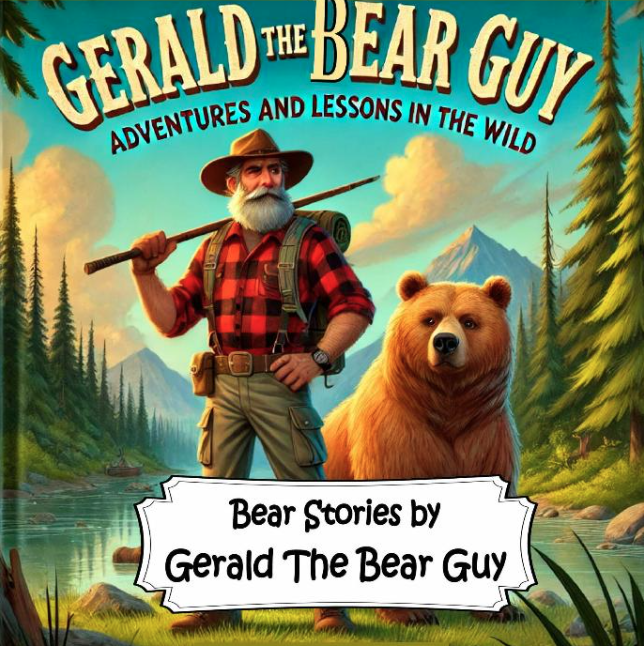
The Rules of Bear Country
Most bear conflicts are caused by humans making preventable mistakes. Here's how to not be that human.
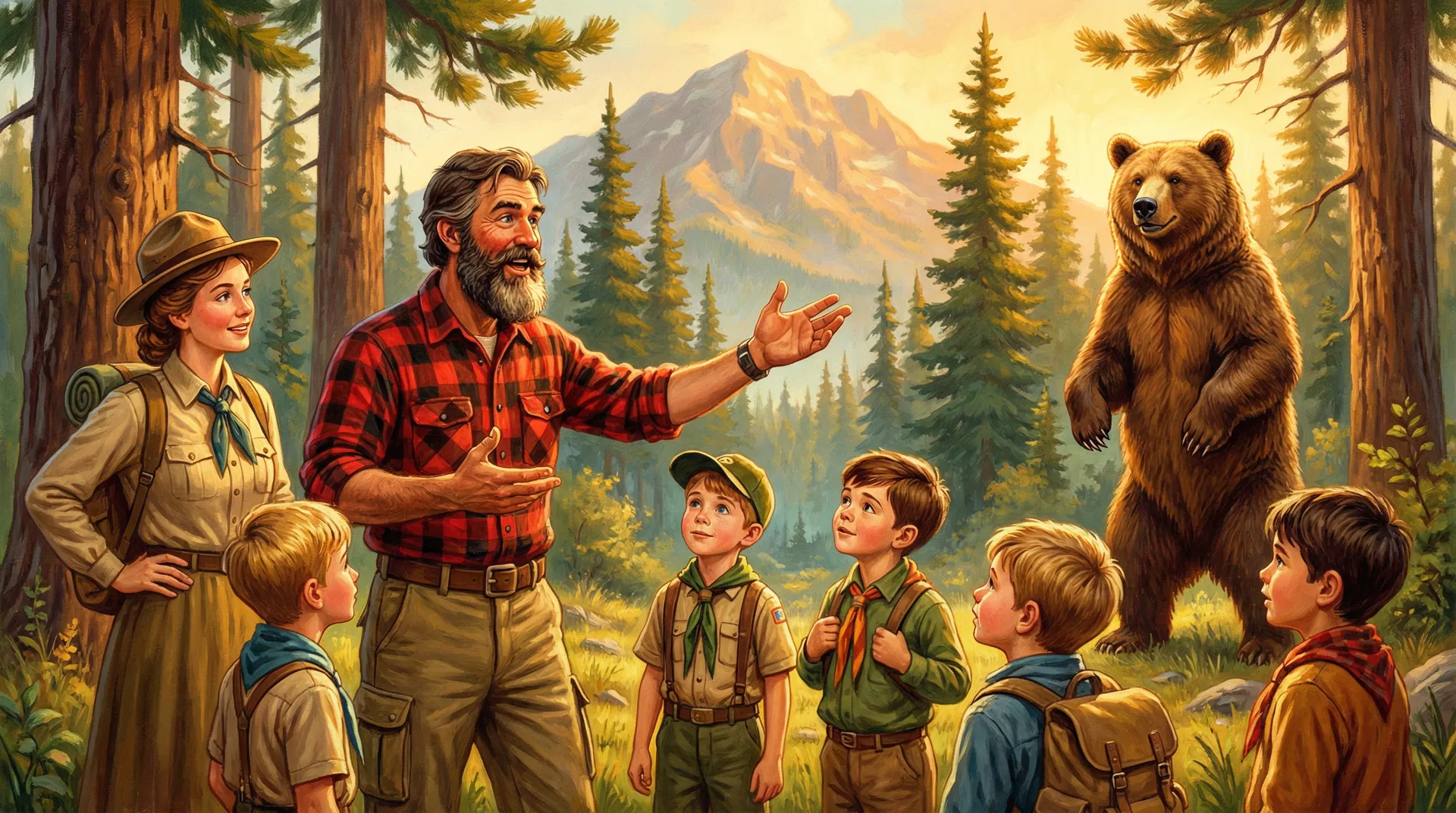
Gerald teaching the Circle of Safety — the most important bear encounter skill you can learn.
Lock Your Bins
Bears have noses 100× stronger than ours. If your garbage smells, they will find it. Bear-safe bins keep bears out — and keep bears alive. This is the single most effective thing you can do.
Clean Camp
Food in your tent is an invitation. Store all food and scented items in bear canisters or hung high between trees. Zero-trace camping isn't just good manners — it saves bear lives.
Stand Tall
If you see a bear, make yourself big. Open your arms, speak calmly: 'Hey bear, just passing through.' Back away slowly. Never run — bears can hit 55 km/h and they will catch you.
Give Space
A bear standing on its hind legs is curious, not aggressive. It's trying to see or smell you better. Give it space and time. It will move on. The encounter is yours to ruin.
Pick Your Fruit
Fallen apples, plums, and berries are a bear buffet. Pick up fallen fruit from your yard. Bears follow their nose — don't give them a reason to visit your neighbourhood.
Fence Smart
Electric fencing works brilliantly around beehives, chicken coops, and compost bins. It deters bears without harming them. It's the kindest, most effective solution available.
Myth Busters
Bears are naturally aggressive and want to attack humans.
Bears are shy and prefer to avoid humans. Most encounters end peacefully if you stay calm.
If a bear stands up, it's about to charge.
A standing bear is curious — trying to get a better look. Give it space and it will move on.
You should run or climb a tree to escape a bear.
Never run. Black bears climb trees. Stand tall, speak calmly, back away slowly.
Feeding bears from a safe distance is harmless.
A fed bear is a dead bear. Even once. Bears learn to seek humans for food — it always ends badly for the bear.
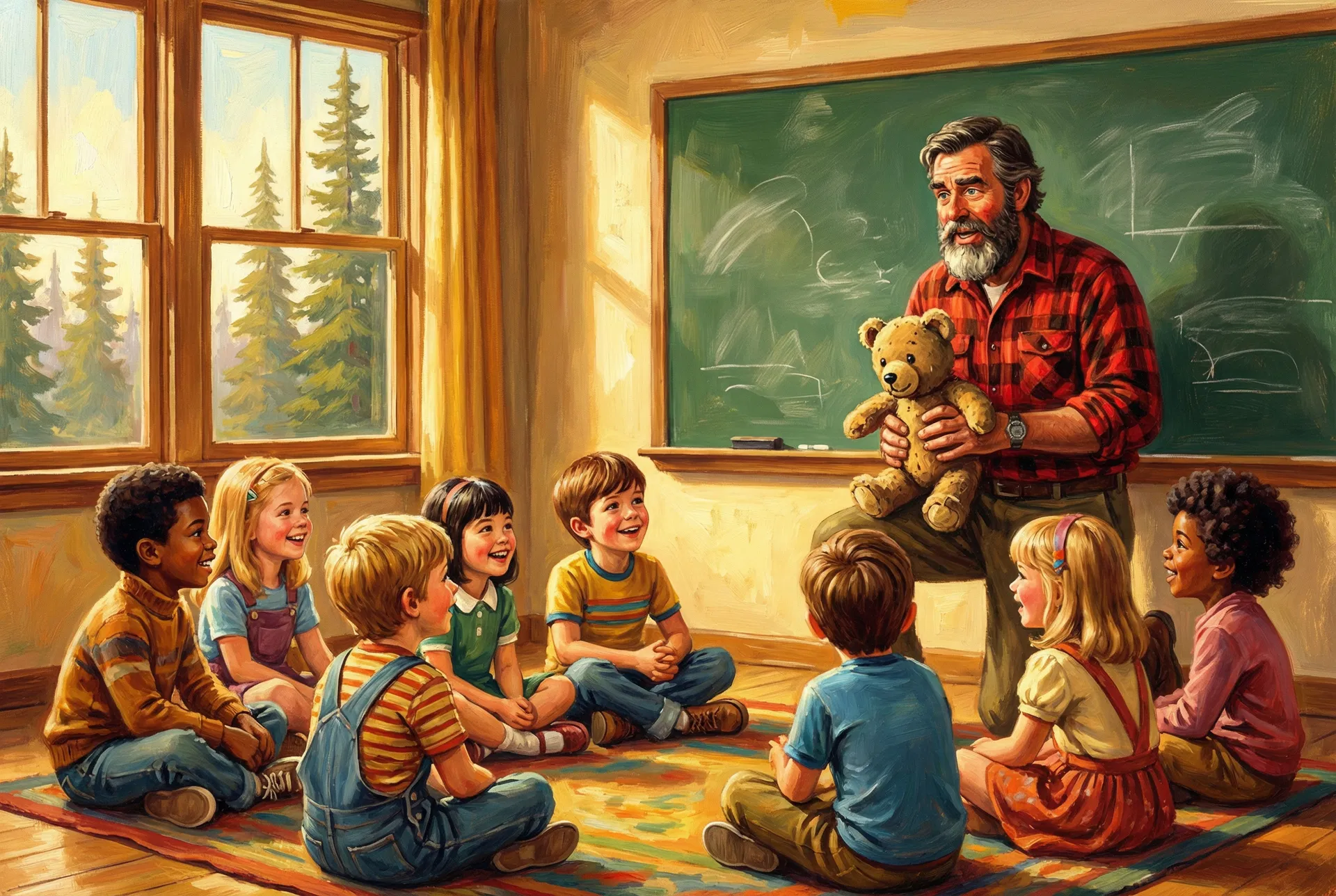
"Burp" the stuffed bear is Gerald's secret weapon — kids never forget a lesson that comes with a prop.
Bring Gerald
to Your Classroom
West Coast Wildlife's bear safety program has been running in schools across BC for years. It's designed to build empathy, not fear — and to turn kids into the wildlife champions their communities need.
Grant: Up to 100% grant coverage available
Props: Burp the stuffed bear, rubber food props, colouring sheets
Grant: Up to 100% grant coverage available
Props: Burp + bear-safe bin demo, skill-testing prize questions
The 25-Minute Lesson Plan (Grades 5–7)
Find the storytellers, questioners, and know-it-alls. Who's seen a bear? Set the energy and establish trust.
Meet Burp! Fur colour, big head, no tail. Boy vs girl vs mom with cubs. Don't assume kids have seen a bear up close.
The Circle of Safety. How to look big. Walk away safely. Why you NEVER run. Practice it together.
Bear-safe containers. Locked smells. How to inspire your parents to make bear-friendly choices at home.
Recycling tips. Sealed compost. Don't touch electric fences. Blend food scraps. The small things add up.
See the world from a bear's point of view. Zero-trace camping. The future policy-makers are in this room.
Classroom Activities
Draw a map of your neighbourhood from a bear's perspective. Where are the food smells? Where are the dangers? Compare maps as a class and discuss what you'd change.
Take a checklist home. Are the bins bear-safe? Is the compost sealed? Fallen fruit on the ground? Report back with solutions — and the conversations you had with your family.
Design your own version of the Bearbrella. What patterns? What sounds? What features would work best in your local environment? Present your design to the class.
Write a letter to Rufus the bear explaining what you've learned and what you'll do differently. Great for bulletin boards and for making the lesson personal and lasting.
Get the Book & Teacher's Aid
12 chapters of far-out bear adventures in Gerald's voice — a story that teaches real bear safety without ever feeling like a lecture. For kids ages 6–12 and the adults who read to them. Includes teacher's notes and In Memoriam.
Everything a teacher needs: full lesson plans for K–4 and Grades 5–7, timed curriculum, discussion questions, 4 interactive activities, myth-busting guide, bear colouring sheets, and the Bearbrella Drill instructions.
- ✓ Grades K–4 full lesson plan (20 min)
- ✓ Grades 5–7 full lesson plan (25 min)
- ✓ Discussion questions & classroom activities
- ✓ Bear myth-busting reference sheet
- ✓ Grant application guidance (up to 100% coverage)
Book + Teacher's Aid + Bear Friendly Neighbourhood Program Guide. Everything you need to bring bear safety into your school and community.
Are You a Bear
Friendly Neighbour?
Talk is cheap. Prove it. Invite our team to audit your home or business. Pass the check and earn your Bear Friendly sticker — the badge that tells your whole street you actually give a hoot about the wild things that share your neighbourhood.
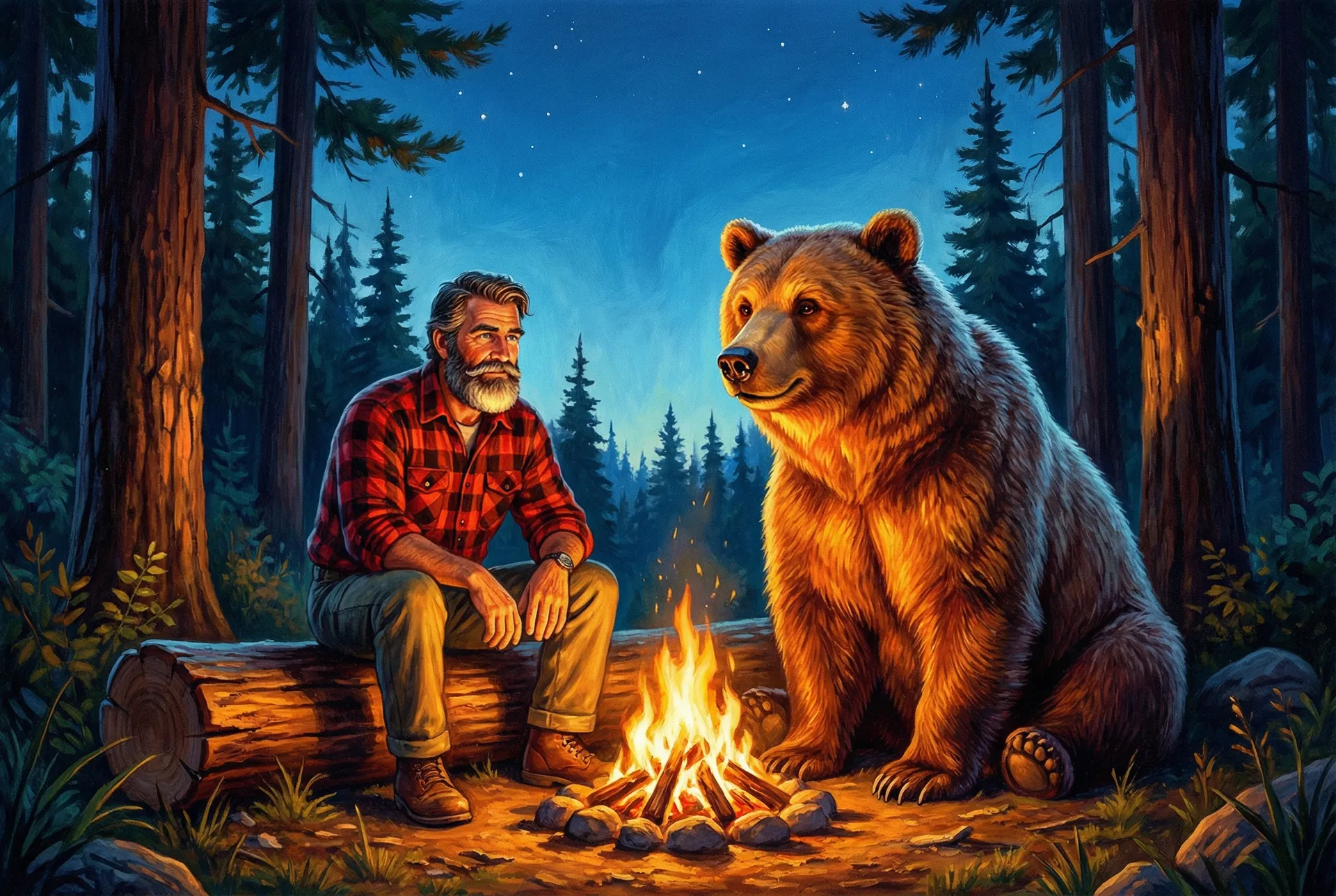
Gerald and Rufus — the partnership that started it all.
Who Is Gerald?
Gerald Shaffer is a wildlife advocate, inventor, storyteller, and lifelong student of the natural world. Operating from the Sunshine Coast of British Columbia, Gerald has spent decades working at the intersection of human communities and wild spaces — teaching bear safety in schools, developing coexistence tools like the Bearbrella, and advocating for the rights of wildlife to exist in their natural habitats without penalty for human negligence.
He is the founder of West Coast Wildlife Conservation Research and Innovation Inc. and the creator of the Bearbrella — a multi-purpose wilderness safety tool designed to reduce bear-human conflict without harm to either party. He is also the founder of Shaffer's Naturally Straws, a seed-to-straw ryegrass farming operation that reflects his broader belief that the most sustainable solutions are often the oldest ones, rediscovered with new purpose.
Gerald is part of the Just Gerald universe — a growing collection of publications, products, and platforms that share a single philosophy: that the natural world and the human world are not in opposition, and that the gap between them can be closed, one story at a time.
"The wild is not our enemy. It is our inheritance. And like any inheritance, we can squander it — or we can honour it."
— Gerald Shaffer, The Bear Guy
The People Who
Make It Possible
This book would not exist without the tireless work of those who have dedicated their lives to wildlife coexistence on the Pacific Coast.
Decades of advocacy for black bears have changed the conversation in communities across British Columbia and beyond. Her work has saved countless lives — both human and bear. Her patience, her research, and her refusal to give up are an inspiration to everyone in this field.
Her commitment to wildlife education has brought the message of coexistence into classrooms and community halls across the region. Her patience, passion, and expertise are an inspiration. She has made the world a more empathetic place, one classroom at a time.
Her quiet, steady dedication to the animals in her care has made the world a gentler place for the wild things that cannot speak for themselves. The work she does — often unseen, always essential — is the foundation on which everything else is built.
"These three women are the backbone of bear coexistence on the West Coast. The bears owe them a debt they can never repay. So do we."
— Gerald ShafferFor the Bears.
And for Those Who Tried to Save Them.
This book is dedicated, in part, to the bears who lost their lives due to human negligence — bears who were not dangerous, not aggressive, not malicious. Bears who were simply hungry, and who found food in the wrong place at the wrong time. Their deaths were preventable. Every single one.
May the stories in this book help ensure that fewer bears face that fate. May the children who read it grow up to be the generation that finally gets this right.
And this book is dedicated, equally, to the Conservation Officers who carry the heaviest burden in this story. These are the men and women who are called when a bear gets into trouble — who must make impossible decisions in impossible moments, balancing the safety of communities against the lives of animals they, too, wish they could save.
They are not the villains of this story. They are often its most tragic heroes. They enforce the laws that humans have failed to make good enough. They deserve our gratitude, our support, and above all, our commitment to making their hardest calls unnecessary.
To every Conservation Officer who has ever wished they didn't have to make the call they made: this book is for you. We see you. We are working to make your job easier.